Learn · Track · 10 steps
Secondaries 101
How secondaries work, in ten steps: why investors sell fund stakes before a fund ends, how those stakes are priced and what managers do when they run the sale themselves. Each step links to its glossary entry, with a short video where we have one.
0 of 10 read
1.What secondaries are
Secondaries are the buying and selling of existing stakes in private funds, or of the assets inside them, which gives investors a way out before a fund ends and gives buyers a look at what they are paying for.
Secondaries: Secondaries are the buying and selling of existing stakes in private funds, or of the assets inside them, after the original investment was made, rather than committing money to a new fund.
Also: Private markets
2.LP-led secondaries
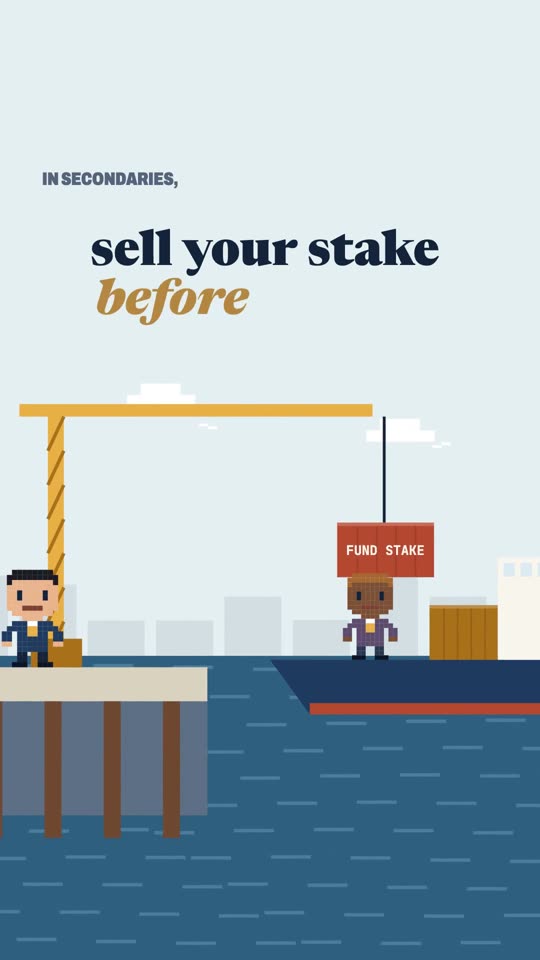
An investor that wants cash or to rebalance its portfolio can sell its stakes to a buyer, usually at a discount or premium to their reported value.
LP-led secondary: An LP-led secondary is a sale by an investor of its stakes in one or more funds to a buyer, often to raise cash or rebalance its portfolio.
4.Discounts and premiums
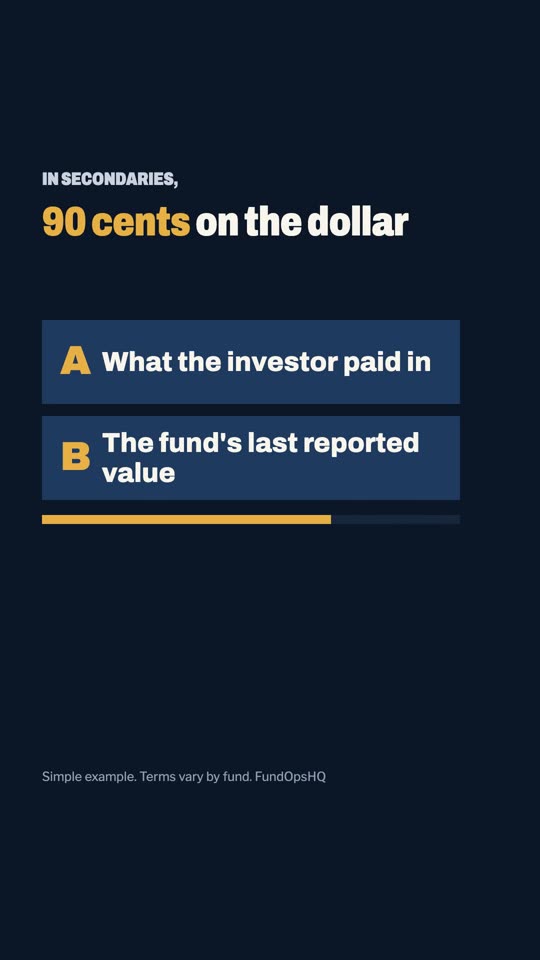
Deals are quoted against NAV, so the discount or premium shows how buyers view a fund’s reported values and how long they expect to wait for cash.
NAV discount: A NAV discount is the gap between what a buyer pays for a stake in a fund and the net asset value the fund last reported for it.
5.Deferred payments
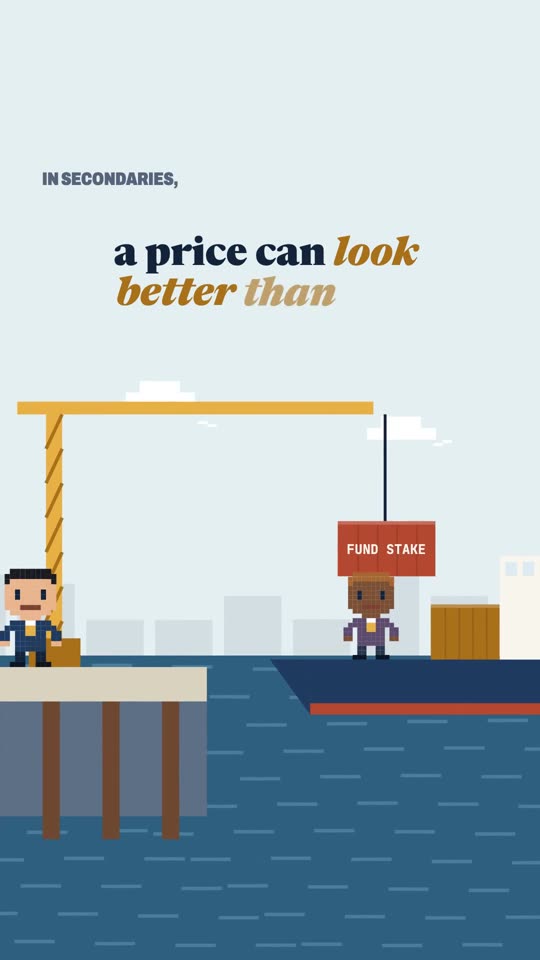
Part of the price can be paid later, and money paid later is worth less than money paid now, so two bids with the same headline price can be worth very different amounts.
Deferred payment: A deferred payment lets the buyer in a secondary sale pay part of the price later, often over months or a few years.
6.Taking over what is still owed
A buyer of a fund stake usually takes over any part of the commitment not yet called, and the manager usually has to agree before the stake can move under the fund’s LPA.
Commitment: A commitment is the total amount an investor legally agrees to provide to a fund, which the manager draws down gradually through capital calls.
Also: LPA
7.GP-led secondaries
In a GP-led deal the manager runs the sale itself, often to keep its best assets longer, which is a conflict of interest because it sits on both sides, so the price-setting process and the investors’ advisory committee matter.
GP-led secondary: A GP-led secondary is a deal run by a fund manager to move assets out of an existing fund, usually into a continuation vehicle, with new investors buying in.
Also: LPAC
8.Continuation vehicles
A continuation vehicle buys assets from a manager’s older fund, so existing investors choose to cash out or roll over, and the question every investor asks is who set the price.
Continuation vehicle: A continuation vehicle is a new fund that buys one or more assets from a manager’s older fund, so existing investors can cash out or roll over.
9.Tender offers
A tender offer is a bid made directly to holders at a stated price within a set window, so each investor can choose to sell or keep its stake.
Tender offer: A tender offer is a bid made directly to holders to buy their shares or fund interests at a stated price within a set time window.
10.Buying later in a fund’s life
A buyer arrives after the early fees and the dip of the J-curve have mostly passed, can see what the fund owns, and can spread its money across several vintages at once.
J-curve: The J-curve is the usual pattern where a fund’s reported returns dip below zero in its early years, because of fees and costs before investments mature, and then climb.
Also: Vintage year, DPI


Check yourself
0 of 5 answered
5 questions on the track. Pick an answer to see why.
Definitions, not advice. Your progress and quiz answers are kept in this browser only; nothing is sent anywhere.
See an error, or a step we should add?