Learn · Track · 10 steps
Hedge funds 101
How hedge funds work, in ten steps: what they are, how they use shorts and borrowing, what they charge, how investors get their money out and how a manager is judged. Each step links to its glossary entry, with a short video where we have one.
0 of 10 read
1.What a hedge fund is
A hedge fund mostly trades securities that can be sold quickly and lets investors in and out at set intervals, while a private equity fund calls committed money and ties it up for years, so the two work very differently on fees, liquidity and valuation.
Hedge fund: A hedge fund is a pooled fund that mostly trades liquid securities, often using short selling, borrowing and derivatives, and lets investors add or withdraw money at set intervals.
Also: Private markets
2.Long and short
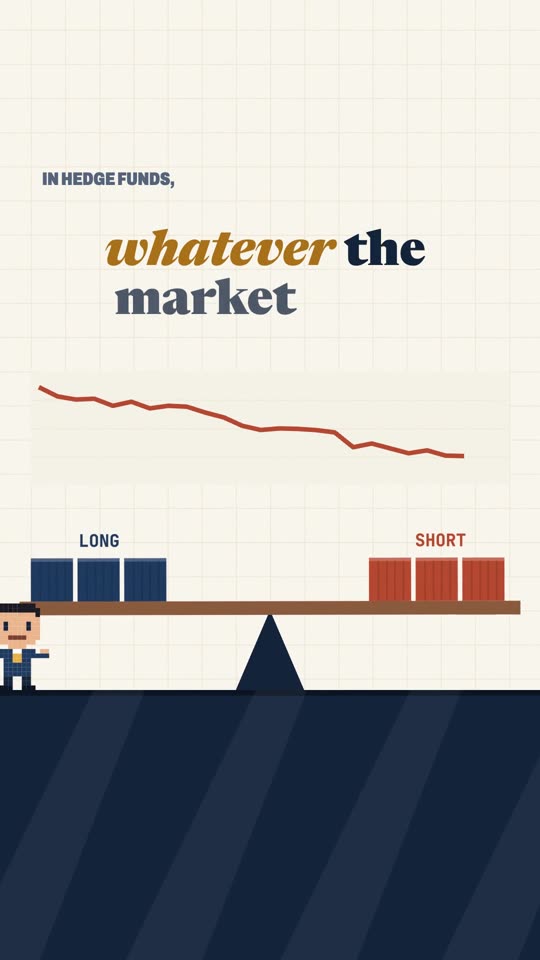
A long/short fund buys shares it expects to rise and sells short shares it expects to fall, so how much market risk is left depends on the balance between the two, and losses on a short position have no fixed limit.
Long/short equity: Long/short equity is a hedge fund strategy that buys shares expected to rise and sells short shares expected to fall, so gains can come from both and the shorts offset part of the market's swings.
Also: Short squeeze
3.Leverage and margin calls
Borrowing lets a fund hold more than its own capital, which magnifies gains and losses, and if positions fall far enough the lender can demand more collateral or sell them at a low price.
Margin call: A margin call is a broker’s demand for more cash or collateral when a position bought with borrowed money falls below the required level.
4.Fees: two and twenty
A hedge fund usually charges a yearly management fee on the money it runs plus a performance fee, a share of the gains, a pattern long known as two and twenty, and the performance fee is usually charged only on gains above a high-water mark.
Management fee: The management fee is the annual charge investors pay a manager to run a fund, often 1% to 2% of committed capital during the investment period.
Also: Hedge fund
5.Lock-ups, notice and gates
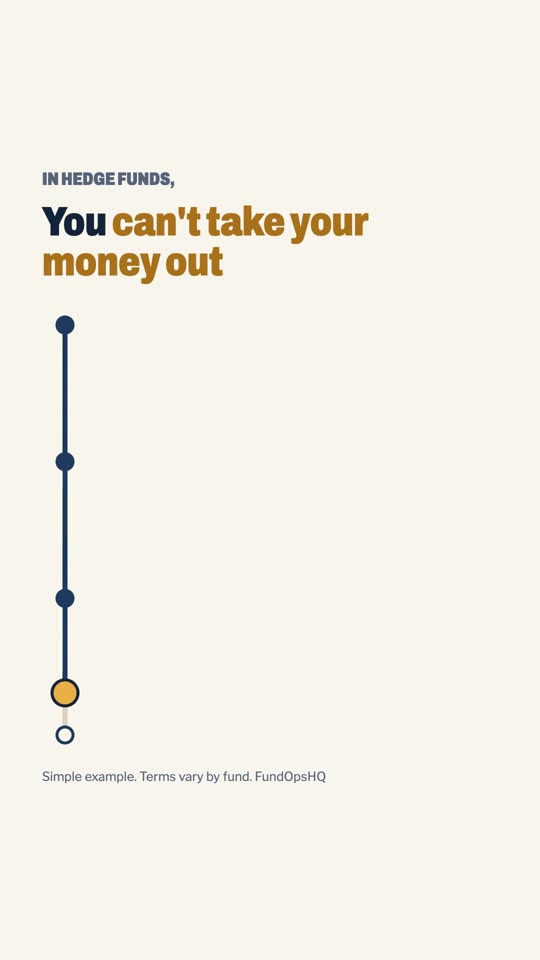
A lock-up bars withdrawals for a set period, after which redemptions follow a schedule with a notice period, and a gate can cap how much leaves at once, so an investor’s money is only as liquid as these terms allow.
Lock-up: A lock-up is a period during which investors cannot withdraw their money from a fund.
Also: Redemption gate
6.Side pockets
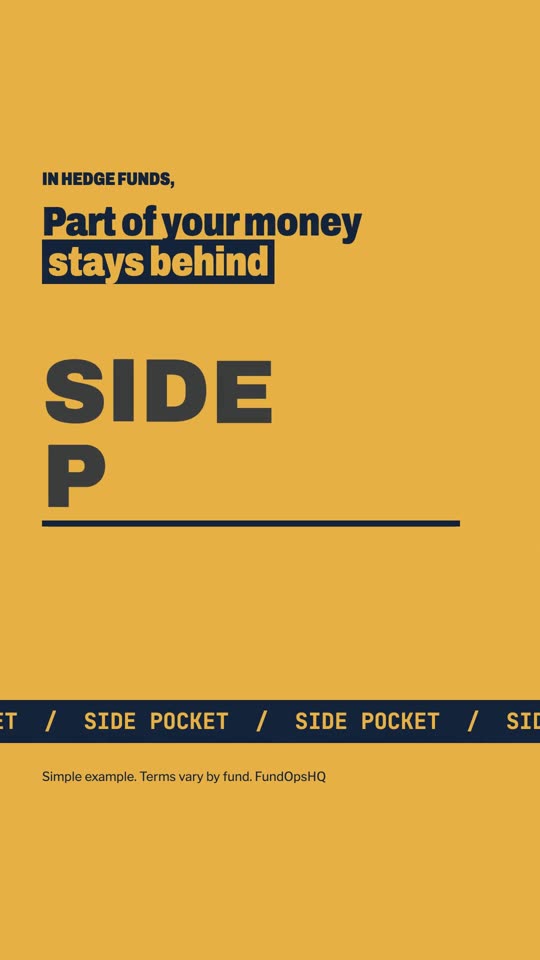
A side pocket sets hard-to-value or illiquid assets apart so that withdrawals do not force a sale of them, which protects investors who stay and holds back part of the money of those who leave.
Side pocket: A side pocket separates hard-to-value or illiquid assets from the rest of a fund, typically a hedge fund, so redemptions do not force a sale of them.
7.Prime brokers
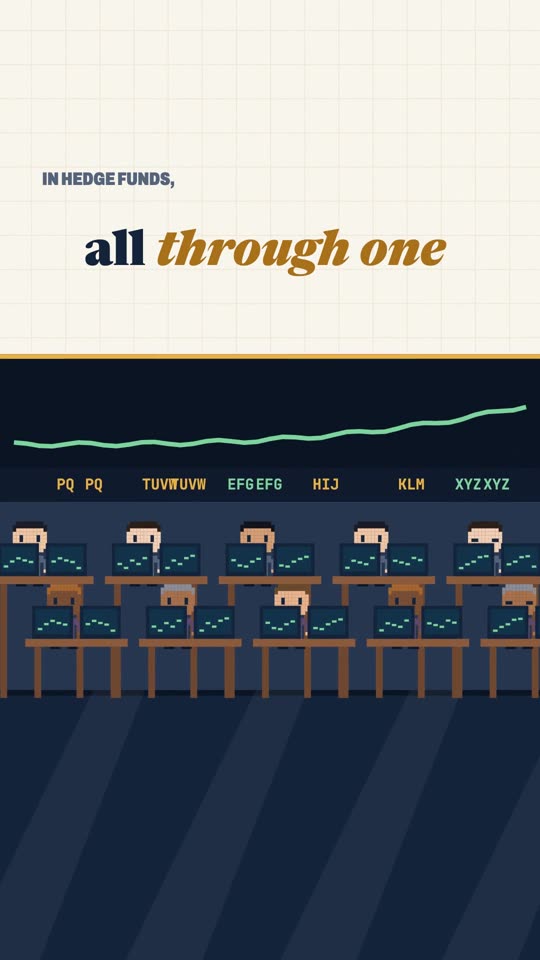
A prime broker lends a hedge fund money and shares, settles its trades and holds its assets, so the fund’s leverage and the safety of its collateral can depend on that one counterparty.
Prime broker: A prime broker is a bank or broker-dealer that gives hedge funds and other large investors a bundle of services: loans for leverage, shares lent for short selling, clearing and settling trades, holding assets and reporting positions.
8.Alpha and beta
Beta is the part of a return that comes from moving with the market, which an index fund supplies cheaply, so what investors pay hedge fund fees for is alpha, the return beyond it.
Alpha and beta: Beta is how much an investment tends to move with the market, and alpha is the return it earns beyond what that market exposure would predict.
9.Drawdowns
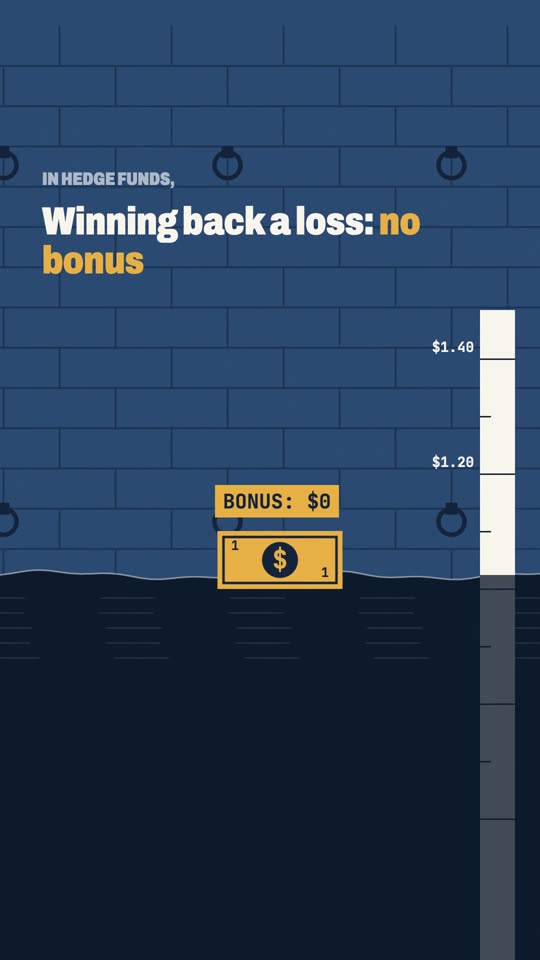
A drawdown is a fall from a fund’s peak, any loss takes a larger percentage gain to win back, and until a stake is above its high-water mark again the manager earns no performance fee on the recovery.
High-water mark: A high-water mark is the highest value an investor’s stake has reached, and a manager earns no performance fee until the stake is back above it.
10.How investors judge a manager
Investors look past a fund’s return to how bumpy the ride was, and the Sharpe ratio puts the two together as return for each unit of risk, though it can miss the risk of a rare large loss.
Sharpe ratio: The Sharpe ratio is a fund’s return above a safe rate, divided by how much that return swings, so it shows how much return came for each unit of risk.
Also: Alpha and beta



Check yourself
0 of 5 answered
5 questions on the track. Pick an answer to see why.
Definitions, not advice. Your progress and quiz answers are kept in this browser only; nothing is sent anywhere.
See an error, or a step we should add?