In this lesson
- Terms: Subscription line, IRR, TVPI, Hurdle rate, ILPA
- To work through: a worked example, a 52-second film, 3 check questions
Underlined terms show their definition when you rest on them or tap them.
A subscription line is a short-term loan to a fund, backed by investors’ unfunded commitments. The fund buys with it and calls investors later to repay. From the investors’ side, their money goes in later than the deal did.
IRR is measured on investors’ own cash flows, so a later call means a shorter holding period and a higher IRR, even though the deal is the same. The interest on the loan is a cost, so the multiple goes slightly down. ILPA, the LPs’ trade body, put numbers on it in a simple example in its 2020 guidance: delaying the first call by one year raised IRR from 6.62% to 7.14%, and by two years to 7.98%, while TVPI fell from 1.45x to 1.40x and then 1.35x.
ILPA says the effect is greatest early in a fund’s life and fades later, but never quite disappears. Because not every fund uses a line, it makes IRRs harder to compare. ILPA recommends managers report net IRR both with and without the line, and explain how they worked it out, since there is no agreed method. Its principles also say a line should not be used chiefly to lift reported IRR, and that the preferred return should run from the day the line is drawn.
The same deal in ILPA’s units: 100 invested, fees of 2 a year for six years, and 162 back in year 7, a year after the last fee. Only the date of the first call changes.
| Called at once | IRR 6.62% · TVPI 1.45x |
|---|---|
| First call delayed 1 year | IRR 7.14% · TVPI 1.40x |
| First call delayed 2 years | IRR 7.98% · TVPI 1.35x |
A higher IRR and a lower multiple from one decision about timing.
Key takeaway: why it matters to investors
Two funds with the same deals can report different IRRs because one borrowed first. Asking for IRR with and without the line, and looking at the multiple beside it, is how investors compare them on equal terms.
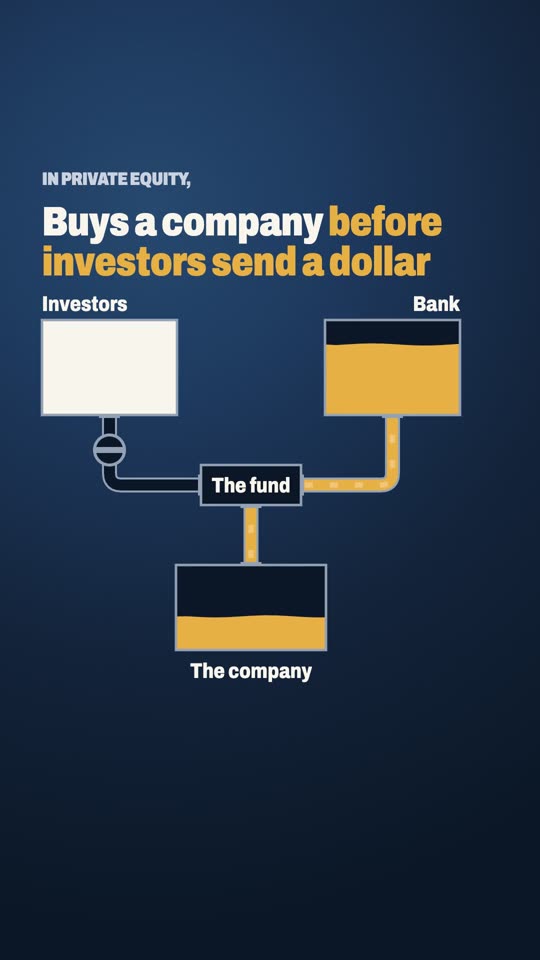
Watch · 52 seconds
A fund can buy a company before investors send a dollarA subscription line is a loan a fund takes against what investors have promised. Cash gets called later, so the clock on IRR starts later. The IRR can go up. The profit doesn't. Simple example, before interest. Terms vary by fund.
Check yourself
0 of 3 answered
Pick an answer to see why. Answer all 3 to finish the lesson.
3 questions left to finish the lesson.
Sources
The facts in this lesson were checked against these public pages on November 10, 2026. Examples use round invented numbers. Simple examples; terms vary by fund.
- ILPA Guidance on Disclosures Related to Subscription Lines of Credit (June 2020), Institutional Limited Partners Association. Recommends net IRR with and without the facility and the method used; no agreed method exists; the IRR effect is greatest early and diminishes; its notional example: delaying the first call one and two years lifts IRR from 6.62% to 7.14% and 7.98% while TVPI falls from 1.45x to 1.40x and 1.35x.
- ILPA Principles 3.0 (June 2019), GP and Fund Economics, Institutional Limited Partners Association. Subscription lines should not be used chiefly to enhance reported IRR; where a line is drawn, the preferred return should run from the date the facility is drawn.
Definitions, not advice. Your answers are kept in this browser only.
See an error in this lesson?