In this lesson
- Terms: Investment period, Recycling, Fund extension, Continuation vehicle, GP-led secondary, Evergreen fund
- To work through: a worked example, a 31-second film, 3 check questions
Underlined terms show their definition when you rest on them or tap them.
Most private funds are closed-end: they raise money once and have a fixed term set in the LPA. Goodwin, a law firm, puts the typical life at 8 to 12 years depending on the asset class, with infrastructure funds more likely to run longer.
The first part is the investment period, usually the first five or six years, when the manager can make new investments. After it the fund can generally only add to what it already owns, and the work is growing those investments and selling them. Some funds allow recycling: reinvesting early sale proceeds instead of paying them out, usually up to a cap.
Sales rarely line up with the calendar, so most funds allow a fund extension. Goodwin finds documents typically allow two one-year extensions, some three, often the first at the manager’s discretion and later ones with the LPAC’s or the investors’ consent. ILPA’s own recommendation is stricter: one-year steps, at most two, approved by the LPAC and then a supermajority of LPs, with no fees after the original term unless investors agree.
When a fund still holds assets at the end, the manager can sell them, distribute them, or move them to a continuation vehicle, a new fund that buys them so existing investors can take cash or roll over. Then the fund is wound up.
A fund with a ten-year term, a five-year investment period and two one-year extensions.
| Years 1 to 5 | Buys companies |
|---|---|
| Years 6 to 10 | Owns, grows and sells them |
| Years 11 and 12 | Extensions, if needed, to finish selling |
| Longest life under its terms | 12 years |
Real funds overlap these stages: early companies are often sold while the fund is still buying.
Key takeaway: why it matters to investors
The term and the investment period tell an investor how long its money will be tied up and when the fee usually falls. Extensions and continuation vehicles push cash back later, which is why investors negotiate who approves them and what fees run during them.
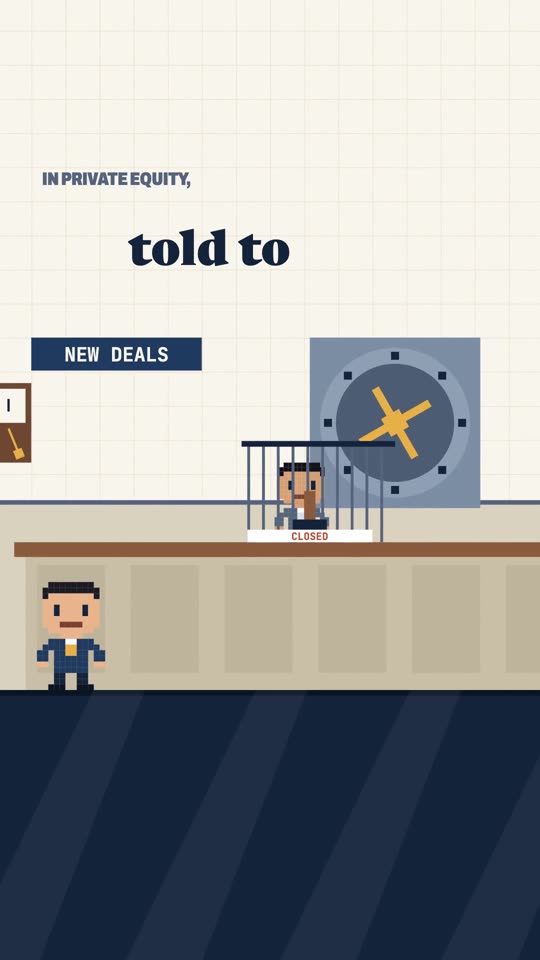
Watch · 31 seconds
A fund can be told to stop buying, halfway through its lifeThe investment period is the first years of a fund, often about five, when the manager can make new investments. Afterward it mostly manages and sells what it holds.
Also: A fund can outlive its own deadline, The manager sold the company. To itself.
Check yourself
0 of 3 answered
Pick an answer to see why. Answer all 3 to finish the lesson.
3 questions left to finish the lesson.
Sources
The facts in this lesson were checked against these public pages on November 10, 2026. Examples use round invented numbers. Simple examples; terms vary by fund.
- Extending Fund Lifespans: Typical Durations (December 2024), Goodwin Procter LLP. Closed-end fund lives typically range from 8 to 12 years by asset class; documents typically allow two one-year extensions, some three; fees in extensions are negotiated.
- Private Equity Fees and Terms Study (July 2020; 90 funds in market in 2018-19, 76% buyout, mostly North American), Callan. Investment period typically five or six years; median fee 1.75% of commitments in it and 1.50% of invested capital after; 17% had no step-down; fee offsets in every fund, 96% at 100%; carry 20% the standard; hurdle typically 8%, 13% of funds none; waterfalls 64% American (deal by deal), 32% European (whole fund), 4% hybrid; GP commitment 3% the standard.
- ILPA Principles 3.0 (June 2019), fund term and structure, Institutional Limited Partners Association. Extensions in one-year steps, at most two, approved by the LPAC and then a supermajority of LPs; the GP commitment should be in cash.
- ILPA Principles 3.0 (June 2019), recycling and clawback, Institutional Limited Partners Association. Recycling should be capped and end with the investment period; an all-capital-back waterfall is the best way to minimise clawback.
Definitions, not advice. Your answers are kept in this browser only.
See an error in this lesson?